Conventional gravity systems
A septic tank and gravity drainfield where soils and slope allow — the most cost-effective option when the site cooperates.


Septic & OWTS
From the soil test through final inspection, Tri-Lakes designs, permits, and installs onsite wastewater systems built for mountain and rural lots — steep ground, shallow bedrock, and the counties that regulate them. Licensed for OWTS and excavation, so one crew handles the whole job.
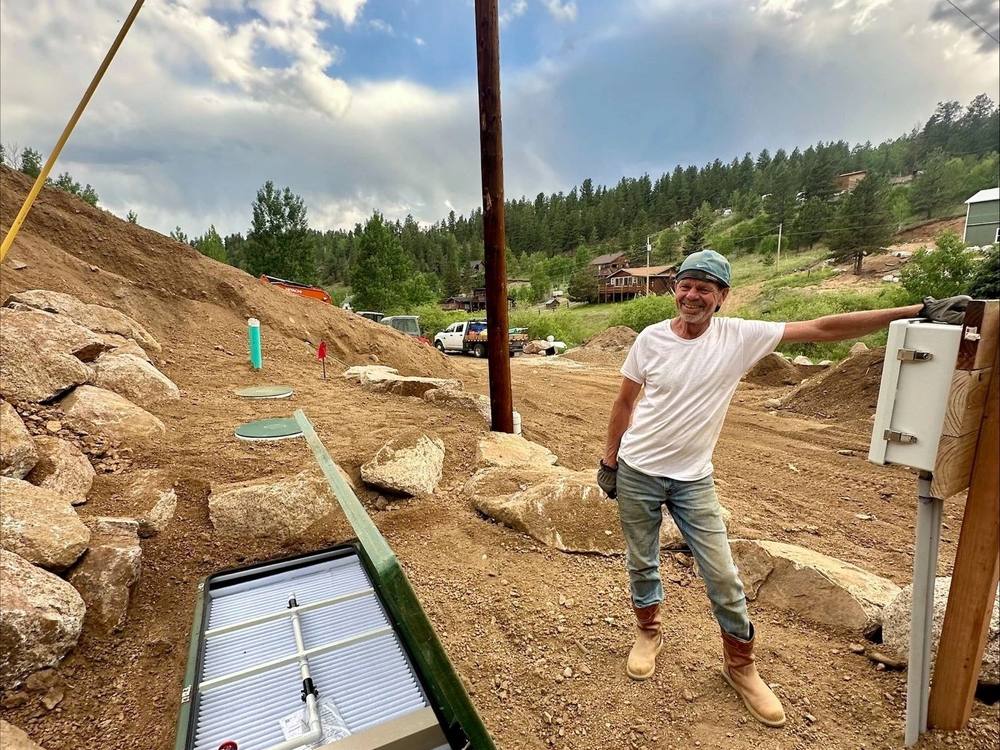
A septic system is the one part of a rural build that fails loudly and expensively when it's done wrong.
Most of the parcels we work on aren't on a sewer main and never will be. That makes the onsite wastewater system — the septic tank and drainfield, or an engineered treatment unit — as important as the foundation. Get the soil evaluation, sizing, and county approval right, and it runs invisibly for decades. Get it wrong, and you're re-digging a drainfield in frozen ground.
We install onsite wastewater systems the way Colorado's mountain and rural counties require them: a real soil profile, a design sized to your home and lot, a permit coordinated directly with the county health department, and an install done by the same crew that handles our excavation. No handing the dig to a stranger.
We start at your lot. On a site visit we check property setbacks, read the slope, make a hands-on visual assessment of the soil, and cross-reference county and health-department code for anything that could constrain a system. You get a written feasibility report and a real plan for the site — typically within three business days.
With the feasibility done, we quote the next step — the soil profile testing — so you know the cost before going any further.
Once you move forward, we come back out and dig two soil profile pits to read the actual soil horizons on your lot. That's the hard data the design depends on — no guesswork, no assumptions.
We hand the soil data to a licensed engineer, who designs and stamps the septic system plans your county requires.
With stamped plans in hand, we price the materials and permitting off the design and give you a firm quote on the actual system.
Once the system is approved and paid, our crew installs it — tank, drainfield or treatment unit, and lines. The same crew that read your soil is the one setting your system.
We schedule the county's final inspection, backfill, restore the site, and hand you a system documented for the life of the property.
A septic tank and gravity drainfield where soils and slope allow — the most cost-effective option when the site cooperates.
For tighter soils or sloped lots, chamber drainfields and pressure distribution spread effluent evenly and protect the field.
Where the water table is high, the lot is small, or the county requires it, an aerobic treatment unit cleans effluent to a higher standard before dispersal.
On shallow-bedrock or high-groundwater sites common in the high country, an engineered mound builds the treatment soil the lot doesn't have.
From feasibility studies to final approval, we manage the entire process — standard gravity systems through advanced engineered treatment units.
Buying land? Before you commit, we assess soil, terrain, and setback limits on site, run a drone survey with photos, and hand you a written feasibility report with rough pricing — so you're not blindsided after closing. See our feasibility reports.
We dig and prep the profile pits so a licensed evaluator and engineer can design the right system, and we facilitate the soils and foundation reports required for purchase and permitting. Already have engineered plans? Upload them to SepticIQ for an instant installation estimate.
We work hand-in-hand with licensed engineers on a code-compliant design, and facilitate the engineer-prepared site plan — well locations, setbacks, property lines, and utility layout — that permitting requires.
We coordinate the documents and pull the septic permit, streamlining the process directly with your county health department so the approval doesn't stall your build.
We source and install advanced solutions — lightweight, durable polyurethane tanks, pressure distribution, and engineered treatment units (ATUs) — matched to your soil and site instead of one-size-fits-all.
The same team that designs and permits the system digs it — our own excavation crew — so the dig isn't handed to a stranger and the schedule stays intact.
We install and service onsite wastewater systems across the Colorado high country and Front Range. Pick your county for local permitting and terrain detail:
It depends on your soil, slope, and system type. A conventional gravity system on good soil is the low end; advanced-treatment or engineered mound systems required by tight soils, high groundwater, or small lots cost more. We give a firm number after the soil test, not a guess over the phone.
We start with a site feasibility report: a visit to read setbacks, slope, and soil and check it against county code. If the lot works, the next step is digging two soil profile pits so a licensed engineer can design a system your county will approve. We handle that whole sequence.
The install itself is usually a few days of field work once the system is approved. The longer part is the sequence before it — feasibility, profile testing, engineered design, and permitting — which is why we start those early and keep them moving.
Yes — that's our normal. Shallow bedrock, decomposed granite, and slope are exactly the conditions we design engineered and pressure-dosed systems for across the high country.
We do. We submit the OWTS permit, coordinate with your county health department, and schedule the required inspections through final approval.
Already have engineered septic or OWTS plans? Upload the PDF for an instant Colorado installation estimate, then have Tri-Lakes, a licensed Colorado OWTS installer, price and build the system.
Tell us about your lot and we'll lay out the path — soil test, design, permit, and install.
Get a Quote